

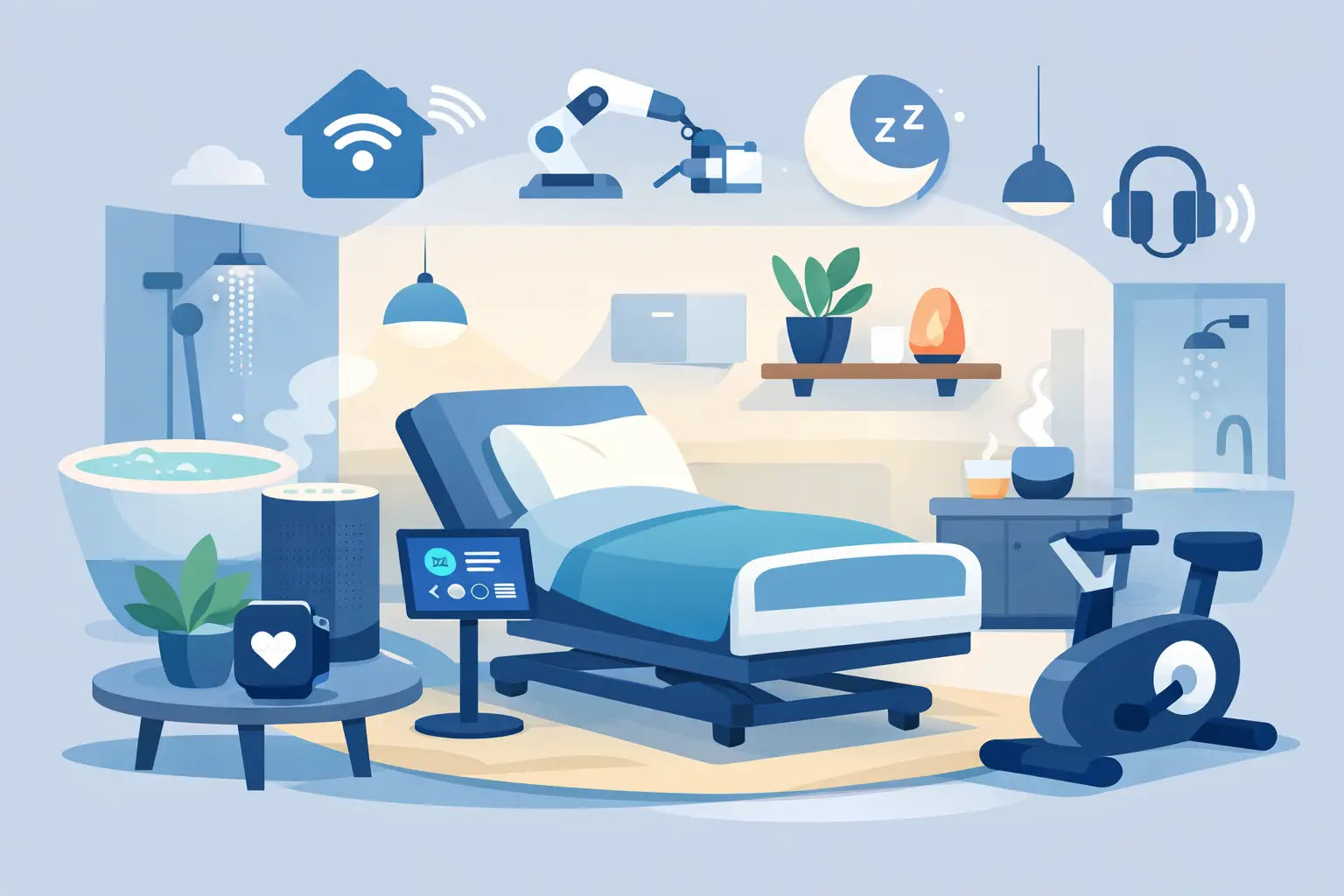
9 Smart Home Recovery Room Ideas
A good recovery room changes the way your home works for you. Instead of squeezing self-care into a guest bath or stretching on the floor after a workout, the right space gives recovery a permanent place in your routine. The best home recovery room ideas are not about filling a room with every wellness trend. They are about building an environment that helps you reset, reduce fatigue, and return to your day stronger.
For some households, that means a quiet space with heat therapy and soft lighting. For others, it means a performance-focused setup with cold immersion, compression, massage, and room to move. The smartest approach usually lives somewhere in the middle - polished enough to feel elevated, practical enough to use often.
What makes a recovery room actually work
A recovery room should feel intentional the moment you walk in. That starts with flow. If the room is cluttered, overly bright, or hard to clean, even premium equipment can feel like a burden. Recovery works best in spaces that reduce friction.
Think in terms of sequence rather than individual products. If you like contrast therapy, your room should make it easy to move from sauna to cold plunge to a comfortable cooldown area. If your priority is stress relief after long workdays, massage seating, calming sound, and warmer finishes may matter more than athletic accessories. The room should support the habit you want to keep.
That is where many home gyms fall short. They push intensity but ignore restoration. A dedicated recovery room closes that gap and turns wellness into a daily standard instead of an occasional reward.
Home recovery room ideas that feel luxurious and useful
1. Start with one anchor feature
Every strong room needs a center of gravity. In a recovery space, that is usually the feature that delivers the biggest physical or mental shift. A sauna creates a warm, restorative focal point. A cold plunge makes the room feel performance-driven and disciplined. A massage chair adds comfort and everyday accessibility.
Pick the anchor based on how you actually recover, not what photographs well. If you know you will use heat therapy four nights a week, start there. If you train hard and want faster post-workout recovery, cold therapy may deserve the prime spot. One excellent anchor will take you further than several random upgrades.
2. Design around rituals, not square footage
A large room is nice, but it is not the deciding factor. A compact room with the right layout can outperform a sprawling space with no logic behind it. Place equipment and furnishings in the order you use them. Leave clear walking paths. Give yourself a place to sit, rehydrate, and transition.
This matters even more in urban homes and higher-end condos where space is tighter, especially in markets like New York or parts of California. In those homes, the best recovery rooms are edited carefully. They avoid the crowded showroom look and focus on a few high-value tools that fit the room well.
3. Build in zones for heat, cold, and rest
The strongest home recovery room ideas create distinct zones. Heat and cold are active experiences. Rest is different. If everything is pushed together without a plan, the room can feel chaotic.
A practical layout often includes a therapy zone, where the sauna, cold plunge, or other main equipment lives, and a reset zone with seating, towels, water, and softer lighting. If space allows, add a movement zone for stretching, mobility work, or breathwork. These zones do not need walls between them. They just need clear purpose.
4. Use lighting to control the mood
Lighting can make a premium room feel restorative or clinical. Bright overhead lights may be useful for cleaning, but they rarely help you unwind. Layered lighting works better. Soft ambient lighting, dimmable fixtures, and warm tones create a calmer atmosphere and make the room feel more like a private wellness suite.
This is especially important if the room needs to serve two functions. You may want energizing light in the morning and lower light in the evening. Flexible lighting gives you both without forcing the room into one mood.
5. Choose materials that support calm and cleanup
Recovery rooms should look refined, but they also need to handle heat, moisture, and regular use. Natural wood, stone-inspired surfaces, textured tile, and performance fabrics all work well when chosen thoughtfully. They elevate the room while standing up to sweat, splashes, and temperature shifts.
There is a trade-off here. Some finishes look beautiful but demand constant upkeep. Others are easier to maintain but can feel cold or generic. The ideal choice balances both. Luxury should feel effortless, not delicate.
6. Make comfort visible
People often invest heavily in equipment and forget the finishing pieces that make the room inviting. Plush towels, robe hooks, a bench, closed storage, slippers, and a place to set water or tea all matter more than they seem. These details shape whether the room feels complete.
A recovery room should encourage you to stay for a few extra minutes. That is when the benefits compound. If the room feels rushed or unfinished, you are less likely to use it consistently.
7. Keep sound and scent intentional
Quiet is a feature. If your recovery space sits near a busy part of the house, consider acoustic panels, insulated doors, rugs, or soft finishes that reduce echo. Sound matters because recovery is not only physical. It is neurological. The room should signal your body to downshift.
Scent can help, but restraint is key. A subtle eucalyptus or cedar note can enhance the atmosphere. Overpowering fragrance can do the opposite, especially in smaller rooms or heated environments. Clean air and light scenting usually feel more premium than anything heavy-handed.
8. Add technology only where it improves the experience
A polished recovery room does not need to be overloaded with gadgets. Smart controls for temperature, lighting, or audio can be genuinely useful. A hidden speaker system or integrated timer can make sessions easier to manage. But screens everywhere can break the mood.
It depends on the user. If you are creating a high-performance space to support a disciplined training schedule, data and timers may help. If your priority is stress reduction, simpler may be better. The room should support focus, not compete for it.
9. Leave room to grow
The best wellness spaces evolve. Today you may want a sauna and stretch area. Later, you may add cold therapy, compression, or a massage chair. Plan for that growth early by thinking about power access, ventilation, plumbing, drainage, flooring, and circulation space.
This is one of the most overlooked home recovery room ideas because it happens behind the scenes. Yet it has the biggest impact on long-term satisfaction. A room that is easy to upgrade stays useful as your routine becomes more advanced.
How to match the room to your lifestyle
Not every recovery room should look like a private spa, and not every room should feel like an athlete lab. Some households want both. The right mix depends on how you live.
If your days are mentally demanding and physically sedentary, focus on stress recovery. Heat therapy, massage, soft lighting, and calm materials will probably deliver the most value. If you train frequently, play golf or tennis, or manage chronic soreness from active weekends, build around physical restoration. That may mean more emphasis on temperature therapy, mobility, and bodywork.
Families often need a hybrid solution. One person wants post-run recovery. Another wants evening relaxation. In that case, versatility wins. A space that can shift from energizing to calming is more likely to be used by everyone.
Common mistakes that make recovery rooms less effective
The biggest mistake is overbuilding for fantasy use. It is easy to imagine a perfect Sunday wellness ritual and forget what your Tuesday actually looks like. If your routine is short, the room should support short sessions well.
Another common miss is prioritizing visual impact over comfort. Beautiful rooms still need storage, easy-to-clean surfaces, and enough breathing room between features. Recovery should feel smooth. If the setup creates hassle, use drops fast.
The last mistake is treating recovery like an afterthought. A premium home deserves a space that supports how you perform, rest, and age. When recovery becomes part of the architecture of your life, wellness stops feeling optional.
At its best, a home recovery room is not just another luxury upgrade. It is a daily advantage - a place that helps you Embrace Deep Renewal, Power Your Performance, and come back to the rest of your life with more strength than you started with.