
Massage Chair for Muscle Recovery: Worth It?
Legs heavy after training. Back tight after a long flight. Shoulders locked up from hours at a desk. That is exactly where a massage chair for muscle recovery starts to make sense - not as a flashy extra, but as a practical way to bring consistent relief and restoration into your home.
For people who care about performance, stress control, and recovery quality, convenience matters. The best recovery tools are often the ones you actually use. A massage chair fits that reality well. It gives you on-demand muscle work without booking appointments, leaving the house, or squeezing one more errand into an already full day.
Why a massage chair for muscle recovery appeals to high-performers
Recovery has changed. It is no longer reserved for professional athletes or luxury spas. More homeowners are building dedicated wellness spaces because they want better energy, fewer aches, and a routine that supports both work and training.
A massage chair sits right in that sweet spot. It brings together relief and consistency. If you lift several times a week, play tennis on weekends, run, cycle, or simply carry a lot of stress in your body, daily muscle tension adds up. Short sessions in a quality chair can help reduce that constant baseline tightness that makes everything feel harder than it should.
There is also a mental side to recovery. Physical tension and mental fatigue often travel together. When your body starts to downshift, your breathing slows, your shoulders release, and your nervous system gets a break. That can be just as valuable as the muscle work itself, especially for executives, busy parents, and anyone balancing intense schedules.
What a massage chair actually does for sore muscles
A good chair is not replacing a physical therapist, sports medicine professional, or hands-on specialist when you have an injury or a specific problem. But for everyday soreness, general stiffness, and post-workout fatigue, it can be very effective.
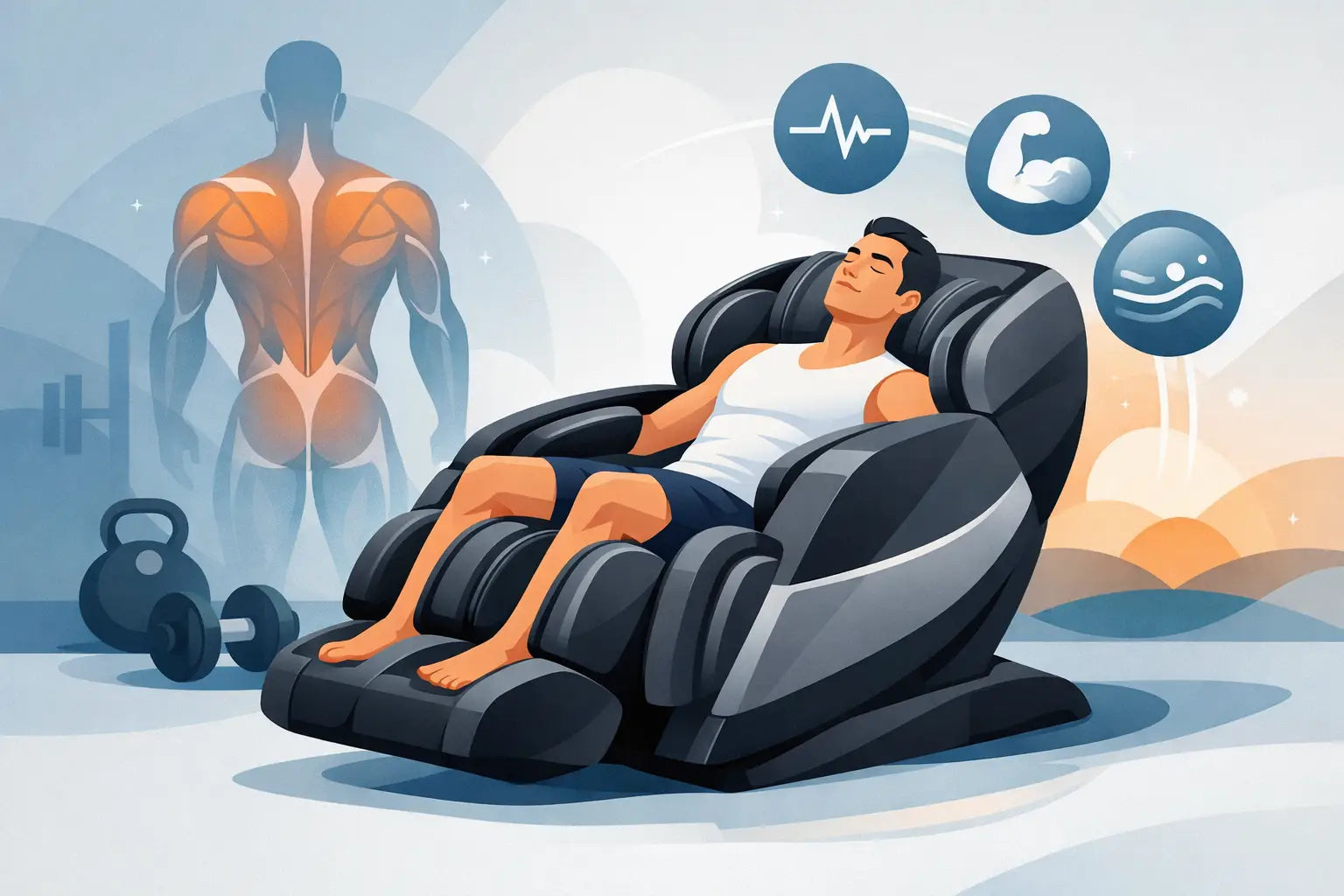
Most massage chairs use rollers, airbags, and programmed techniques to apply pressure across the back, neck, hips, glutes, shoulders, arms, and legs. Depending on the model, you may get kneading, tapping, compression, stretching, and zero-gravity positioning. Together, those features can help encourage circulation, ease muscle tightness, and reduce the feeling of accumulated tension.
That matters after hard training, but it also matters after inactivity. Sitting all day can leave the hip flexors tight, the low back compressed, and the upper back overworked. A recovery session in the evening can help your body transition out of that compressed posture before it becomes your default.
The key benefit is not magic. It is repetition. A single deep tissue massage every few weeks feels great, but a chair gives you access several times a week or even every day. That kind of frequency can be a real advantage for maintaining mobility and comfort.
Where a massage chair helps most
If your soreness tends to live in broad areas rather than one highly specific spot, a chair usually performs best. Upper back tension, low back stiffness, glute tightness, post-leg-day fatigue, and general shoulder heaviness are common examples.
It is also useful for recovery days. You are not always looking for an intense treatment. Sometimes the goal is simply to stay loose, move better, and avoid carrying residual tension into the next workout. A lighter session can support that rhythm without leaving you feeling beaten up.
For older adults and health-conscious buyers who are less focused on athletic performance and more focused on daily comfort, the value is just as clear. Better circulation, less stiffness when getting up, and a more relaxed body at the end of the day all contribute to better living.
When a massage chair is not the whole answer
This is where nuance matters. A massage chair for muscle recovery is a strong tool, but it is still one tool.
If you are dealing with a strain, sharp pain, nerve symptoms, or a movement issue that keeps returning, a chair should not be your only plan. You may need mobility work, strength training adjustments, hands-on treatment, or medical evaluation. Some people also prefer highly targeted manual therapy because a therapist can adapt pressure and angle in real time.
Body type matters too. Not every chair fits every user equally well. Height, shoulder width, calf length, and pressure tolerance all affect the experience. A premium chair with better body scanning and more adjustable settings usually creates a more personalized fit, and that becomes especially important if multiple people in the home will use it.
There is also the question of intensity. More aggressive is not always better. If your muscles are already inflamed or highly tender, a gentle session may do more for you than a punishing one. Smart recovery is about matching the tool to the moment.
Features worth paying attention to
When shopping at the premium end of the market, features should support outcomes, not just sound impressive. Start with roller track design. An SL-track or extended track usually offers better coverage from the neck through the glutes, which is valuable for full-body tension and post-training recovery.
Zero-gravity positioning is another meaningful feature. It shifts your body into a reclined position that can reduce spinal compression and help the massage feel deeper with less effort. For many users, this is one of the biggest differences between a decent chair and a truly restorative one.
Air compression matters more than many people expect. Compression around the shoulders, arms, hips, and calves can create a more complete recovery session, especially if your legs take a beating from running, cycling, or lower-body strength work. Heat is also useful, particularly for people who hold chronic tightness in the low back or want a more calming evening routine.
Preset programs are convenient, but adjustability is what keeps a chair valuable long term. You want to be able to change intensity, target zones, speed, and session length. Recovery is not the same every day. Some days you want deep pressure after a workout. Other days you want a quiet 15-minute reset before bed.
How to use a massage chair for better results
The best results usually come from consistency, not marathon sessions. Ten to twenty minutes after a workout or at the end of the day is enough for many people. If you are using the chair after strength training, think of it as support work rather than a replacement for hydration, sleep, protein, and mobility.
Timing can change the effect. A session after training may help ease soreness and start the downshift into recovery mode. A morning session can reduce stiffness and help you move more freely. An evening session is often the best fit for people using the chair to relieve accumulated stress.
Pairing matters too. If you already use sauna, cold therapy, stretching, or light cardio as part of your routine, a massage chair can fit naturally into that system. Many home wellness buyers are not looking for one miracle product. They are building an environment that makes recovery easier to repeat. That is where a curated approach from a brand like SaunaFit Recovery feels especially relevant.
Is the investment justified?
For the right buyer, yes. But only if the chair gets used.
A premium massage chair is not a small purchase, so the real question is whether it improves your weekly routine enough to earn its place. If you currently pay for frequent massage appointments, struggle with daily tightness, or want a recovery option that removes friction from self-care, the value becomes easier to justify. You are paying for access, consistency, and a more elevated home experience.
If you rarely prioritize recovery now, the chair will not create discipline on its own. It can support a better lifestyle, but it still needs to become part of one. The strongest buyers are usually the ones who already understand that performance and restoration belong in the same routine.
Choosing the right massage chair for muscle recovery
The right chair matches your body, your goals, and your space. If your focus is athletic recovery, look for stronger leg compression, better glute and low-back coverage, and deeper customization. If your goal is stress relief with occasional muscle work, comfort and ease of use may matter more than maximum intensity.
Room layout matters as well. Measure carefully, especially if the chair will live in a home gym, wellness room, or bedroom retreat. Premium equipment should feel integrated into your home, not forced into it.
The best purchase is not always the most expensive model. It is the one that fits your routine so well that using it becomes automatic. That is when recovery stops feeling like another task and starts feeling like part of how you live.
A well-chosen massage chair can turn muscle recovery from an occasional fix into a daily advantage - and that shift tends to show up everywhere, from how you train to how you sleep to how you feel walking into the next day.